ebusinessreviews may earn a commission when you buy through links on this page, at no extra cost to you. This does not affect our ratings.
Every serious bright data review starts from a practical question: how do organizations pull public web information at enterprise scale without building retrieval systems from zero? Engineers, data architects and business intelligence teams lean on proxy networks and automated scrapers to collect structured intelligence. Teams planning these investments often compare data platforms alongside the tools we cover in our Collaboration Productivity section so their workflows stay coherent. At EBusiness Reviews, we test web data platforms against consistent criteria to help teams choose tooling for long-running extraction work.
Connectivity alone tells you little. A solid evaluation also looks at compliance positioning, network diversity and the engineering overhead a vendor leaves on your team. Billing models, usage caps and routing tiers differ widely across providers, so an objective review matters before you commit budget and developer time.
Quick verdict: We rate this platform 7.6/10. It suits development teams and data-heavy enterprises that need broad proxy coverage and structured scrapers. It is a weaker fit for non-technical solo users who lack programming skills and want an immediate turnkey desktop tool.
| Metric | Assessment |
|---|---|
| ebusinessreviews score | 7.6/10 |
| Best for | Engineering organizations and data analysts who need programmatic web data collection |
| Not ideal for | Non-technical operators who want ready-to-run desktop applications with no configuration |
| Key strengths | Broad network routing options, automated unblocker infrastructure and pre-collected datasets |
| What to check before buying | Read bandwidth overage terms and request-based billing definitions on the official pricing page |
1. How ebusinessreviews Reviewed Bright Data
This review examines what the platform is built to do, who it serves and how it stacks up against similar tools. We apply seven ebusinessreviews criteria: features, ease of use, pricing and value, integrations, audience fit, support and competitive position. Plans, prices and limits change frequently, so we flag what you should confirm on the official website before purchasing. This article was researched and drafted with AI assistance, then reviewed and edited by the ebusinessreviews Editorial Team.
2. What Bright Data Is and Who Uses It
Bright Data is a public web data platform offering automated collection tools, managed proxy networks and structured web datasets. It removes the technical friction teams hit when gathering market intelligence, monitoring ecommerce inventories or tracking search results across regions. Buyers often adopt it to avoid the upkeep of private server fleets, IP rotation logic and fragile scraping scripts.
Typical users include brands tracking price movements, cybersecurity groups auditing domain anomalies and academic researchers running linguistic studies. Rather than depending on in-house code that breaks whenever a target site changes structure, engineers use specialized collection platforms to keep extraction pipelines reliable.
Procurement teams should confirm account requirements and technical prerequisites on the official website. Web data providers typically demand explicit compliance declarations and identity checks before granting network access.
3. Core Features of Bright Data
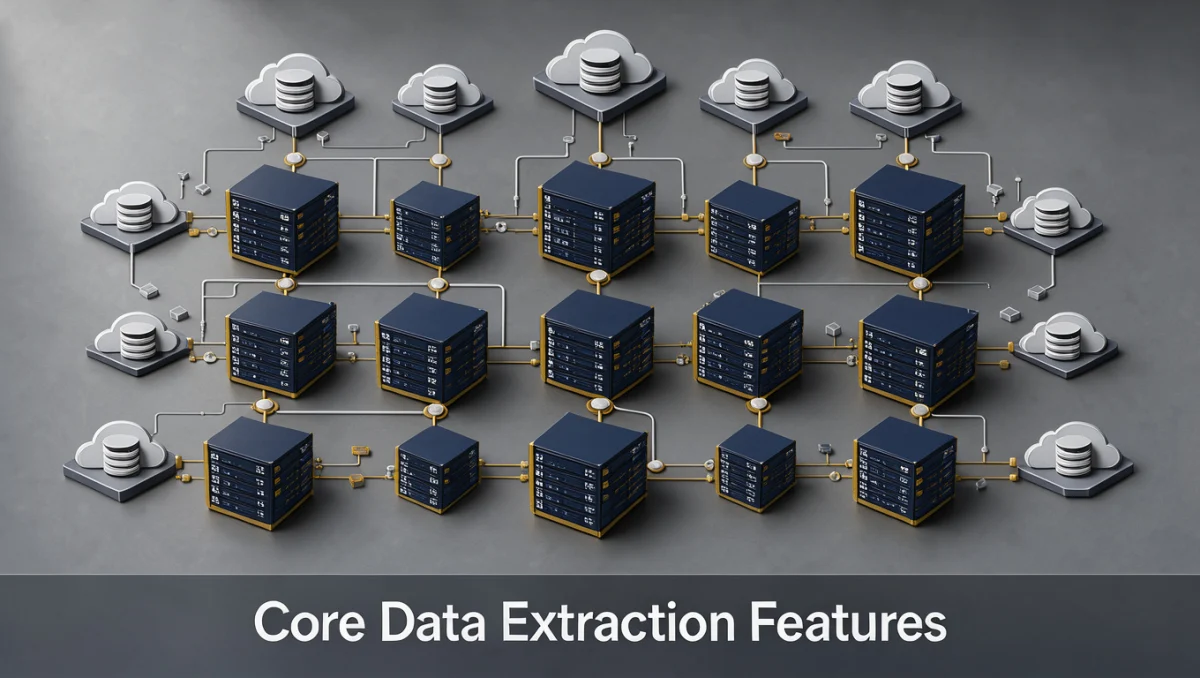
Web data collection software works across several functional layers, from low-level network routing to fully managed extraction. Looking at each pillar helps you judge whether the architecture fits your stack.
Proxy Management and Routing Infrastructure
Proxy services send traffic through intermediate nodes so requests resemble genuine clients across many international locations. The platform offers several routing classes, including residential connections, data center servers, mobile gateways and internet service provider networks. Development teams configure these endpoints in their retrieval pipelines to get past geographic restrictions and inspect localized versions of websites.
For enterprise systems, proxy management covers session persistence, user-agent emulation and targeted protocol routing. Teams should determine whether their targets need session retention across sequential requests or simply concurrent requests spread over distinct geographic subnets.
Automated Web Unblockers and Scraper APIs
Modern scrapers often hit anti-bot defenses, dynamic JavaScript rendering and browser fingerprinting that end automated sessions. Collection software addresses this with automated unblockers that handle cookie generation, header randomization and CAPTCHA solving. You submit a target URL and receive parsed HTML or JSON, so internal developers no longer need to keep reworking headless browser scripts.
Engineering managers should assess whether target endpoints require full browser rendering or lightweight HTTP retrieval. Checking supported browser parameters in the official documentation helps estimate internal computing overhead.
Managed Datasets and Extraction Templates
Beyond raw proxy access, the platform supplies ready-made datasets drawn from prominent public websites, ecommerce directories and business listings. Research teams can skip live harvesting entirely by downloading structured database files. Teams that still need live data can use scrapers built on pre-configured templates for common directory layouts.
Analysts should confirm update intervals and schema definitions in the official catalog before committing to recurring data purchases, so field coverage meets reporting needs.
4. Ease of Use and Learning Curve
Working with web intelligence infrastructure calls for moderate to advanced technical skill. The admin dashboard offers point-and-click proxy generation and traffic visualizers, but real deployment means configuring API headers, setting up SDKs or wiring credentials into custom codebases.
Non-technical business users often struggle to build custom scrapers without developer support. In our bright data review, we found that configuring network routing requires familiarity with HTTP response codes, latency trade-offs and payload sizes. Teams without dedicated programmers face a steep onboarding curve.
To reduce integration friction, technical managers should run sandbox projects that test documentation clarity and SDK compatibility with existing internal software before moving production workloads.
5. Pros and Cons of Bright Data
Weighing functional strengths against practical drawbacks is essential for enterprise platforms. No data infrastructure tool suits every organization.
Platform Advantages
- Broad proxy architecture spanning residential, mobile, data center and ISP endpoints.
- Managed unblocking technology that reduces engineering maintenance on complex websites.
- Pre-collected datasets that shorten time-to-market for business intelligence projects.
- Granular traffic rules that allow city-level and carrier-level request targeting.
Platform Limitations and Mitigations
- A dense dashboard with substantial technical vocabulary. Teams can offset this by centralizing platform management under technical administrators.
- Bandwidth-dependent billing that can produce unexpected cost swings. Hard spending limits and alert notifications in account settings help contain this.
- Mandatory identity verification that requires thorough documentation before network access is activated.
6. Bright Data vs Similar Data Platforms
Knowing the competitive field helps buyers match a provider to their operational scale and developer resources.
| Platform | Target Audience | Architectural Focus | Evaluation Factor |
|---|---|---|---|
| Bright Data | Enterprise engineering units and high-volume data extractors | Comprehensive proxy networks, unblocker APIs and structured datasets | Check minimum billing commitments and usage rules on the official website |
| Oxylabs | Enterprises seeking high-performance extraction and web intelligence APIs | Extensive residential network options and managed scraping infrastructure | Evaluate concurrency limits and protocol support on the official platform pages |
| Smartproxy | Small businesses, individual developers and scaling teams | Accessible proxy access, self-service portals and streamlined setup | Review bandwidth packaging and location targeting limits on official documentation |
Providers in this market fall into distinct tiers. Bright Data and Oxylabs center their offerings on large-scale enterprise extraction, deep network configurability and managed compliance governance. Smartproxy, by contrast, emphasizes accessible proxy packages for smaller engineering teams that want straightforward self-service provisioning without lengthy enterprise contracts.
Buyers should map expected monthly request volume and code complexity against these models. Enterprise-grade infrastructure pays off for organizations processing millions of requests daily, while simpler operations may favor lighter entry options.
7. Who Should Use Bright Data
The right data tooling depends on internal roles, technical capability and project scope.
Freelance Developers and Independent Consultants
Independent consultants managing client data feeds can use automated unblockers to gather public records, business listings or real estate data without running their own servers. Freelancers with limited starting capital should monitor usage closely so variable charges don't exceed project budgets.
Small Business Owners and Growing Startups
Small ecommerce companies tracking competitor inventory and catalog pricing benefit from structured dataset downloads or pre-built scraping templates. Since small companies rarely employ dedicated scraping specialists, managed collection APIs free developer hours for core product work.
Enterprise Marketers and SEO Professionals
Marketing teams monitoring search results across global regions need reliable proxy routing to see localized search pages. These teams should coordinate with IT administrators to configure proxy gateways safely within their analytics stack.
Audiences Not Well Suited for the Platform
Solo operators without coding experience or technical support should avoid low-level proxy infrastructure. Users expecting a point-and-click browser extension that outputs spreadsheets without schema setup will likely find enterprise web data platforms overwhelming for simple tasks.
8. How to Choose the Right Plan
Data platforms offer several licensing models, including pay-as-you-go billing, monthly subscriptions with commit levels and custom annual contracts. Our evaluators recommend a thorough internal audit of project requirements before signing any billing arrangement.
| What to Check on the Official Pricing Page | Why It Matters |
|---|---|
| Billing metric (bandwidth vs successful requests) | Request-based billing protects budgets from failed pages, while bandwidth billing suits lightweight HTML payloads |
| Proxy network classification costs | Residential and mobile routing require higher operational investment than basic data center endpoints |
| Geographic targeting parameters | City-level and carrier-level IP filtering may carry different fees than country-level routing |
| Concurrent connection thresholds | Pipelines running parallel scraping threads must confirm gateway concurrency caps to avoid throttling |
| Overage terms and account spend limits | Automatic throttling prevents runaway scripts from generating unexpected charges |
Calculate typical page payload size before choosing a subscription tier. Rich media, JavaScript bundles and high-resolution images consume bandwidth quickly. Configuring extraction scripts to skip non-essential media can meaningfully reduce platform spend.
9. Frequently Asked Questions About Bright Data
What should buyers evaluate when budgeting for web data infrastructure?
Start with data usage projections, potential overage rates and optional add-ons such as dedicated account management or specialized scraping APIs. Estimating megabytes per scrape and monthly request frequency helps you choose the right billing structure and avoid surprise costs.
How do technical teams decide between buying pre-built datasets and building custom scrapers?
Weigh the ongoing labor cost of maintaining custom scrapers, parsing dynamic layouts and handling site changes against the price of static datasets. When target sites update layouts often, purchasing pre-structured data usually cuts engineering overhead substantially.
What verification steps are required before deploying proxy networks?
Providers typically require identity verification and use-case disclosure to ensure compliance with acceptable use policies. Review the compliance requirements on the official website to confirm your business domain and planned extraction methods align with provider rules.
Should technical teams consult legal counsel before scraping public web data?
Yes. Review target collection goals with internal legal or compliance advisors before deployment. Staying within regional privacy regulations, website terms of service and copyright law protects the organization from regulatory disputes.
10. Final Verdict
Bright Data delivers a broad set of proxy routing solutions, automated collection unblockers and structured web intelligence products. Its network reach and technical infrastructure suit demanding collection pipelines, though the platform's inherent operational complexity calls for qualified engineering oversight.
| Criterion | Score /10 | Reason |
|---|---|---|
| Features | 8.5 | Wide proxy variety, automated scraping tools and pre-built datasets. |
| Ease of Use | 6.5 | Complex admin interface that requires technical background and coding familiarity. |
| Pricing and Value | 7.0 | Flexible billing options, though bandwidth usage demands close budget monitoring. |
| Integrations | 7.5 | Standard language SDKs, terminal commands and API endpoints supported. |
| Audience Fit | 8.0 | Well aligned with data engineers, technical teams and enterprise researchers. |
| Support | 7.0 | Extensive technical documentation, tutorials and structured ticketing workflows. |
| Competitive Position | 8.5 | Holds a prominent enterprise position alongside major network data providers. |
Overall score: 7.6/10
For engineering groups that need dependable proxy infrastructure and programmatic data harvesting, this software offers the scale ongoing projects require. Organizations seeking non-technical collection or basic desktop scraping should consider lighter solutions with simpler operational footprints.
If you have specific software selection questions or need further technical guidance, contact our editorial team through the official ebusinessreviews contact page or follow our company page on LinkedIn.