ebusinessreviews may earn a commission when you buy through links on this page, at no extra cost to you. This does not affect our ratings.
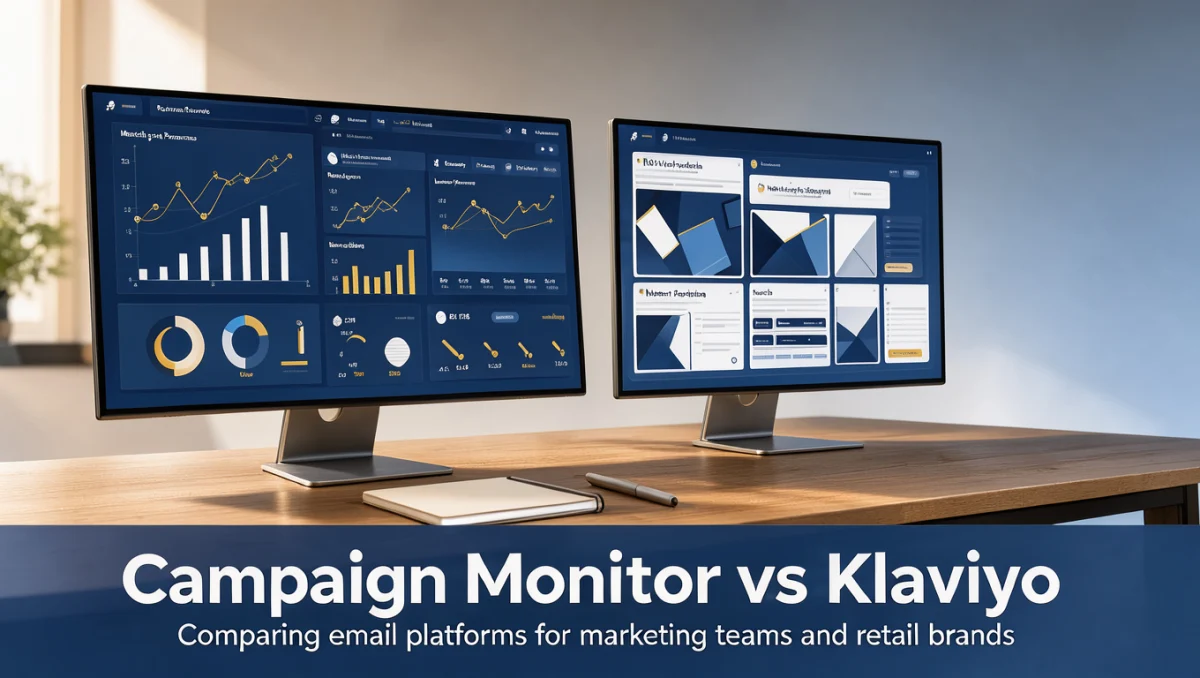
Choosing between campaign monitor vs klaviyo is a decision many marketing teams face when weighing structured newsletter publishing against commerce-driven event messaging. Both tools offer email design, list segmentation, automated workflows and performance tracking, but they are built around different goals. Understanding how each one fits your daily tasks helps you avoid workflow bottlenecks and supports healthy list growth over time.
The right platform depends on your data sources, design priorities and technical resources. Our team examines how each system works in practice so you can make a purchase decision grounded in long-term usefulness rather than promotional claims.
Quick verdict
Campaign Monitor earns an overall score of 7.6/10. It suits teams that want clean newsletter layouts and agency-style management across several clients, but it is less suited to online stores that need advanced purchase triggers. Klaviyo earns 8.2/10 and is the stronger choice for store operators running event-driven automated sequences, though teams wanting simple visual newsletters may find its data configuration more than they need.
| Metric | Summary |
|---|---|
| ebusinessreviews score | Campaign Monitor: 7.6/10 | Klaviyo: 8.2/10 |
| Best for | Campaign Monitor: Brand newsletters and agency accounts | Klaviyo: Online retailers and transactional event tracking |
| Not ideal for | Campaign Monitor: Store owners needing deep purchase triggers | Klaviyo: Teams wanting simple letter distribution without data schemas |
| Key strengths | Campaign Monitor: Drag-and-drop templates and layout control | Klaviyo: Behavioral tracking and ecommerce data flows |
| What to check before buying | Review list pricing thresholds and add-on costs on each official website |
1. How ebusinessreviews Reviewed Campaign Monitor vs Klaviyo
This review looks at what each platform is built to do, who it serves and how it compares with similar tools. We assessed them across seven criteria: features, ease of use, pricing and value, integrations, audience fit, support and competitive position. Plans, prices and limits change often, so we point out what to confirm on the official website before you buy. This article was researched and drafted with the help of AI tools, then reviewed and edited by the ebusinessreviews Editorial Team.
2. Short Answer: Main Differences Between the Platforms

Campaign Monitor centers on visual template craftsmanship, structured campaign delivery and simplified list management for corporate communications, publishing teams and client accounts. Klaviyo focuses on ecommerce behavioral data, real-time customer event triggers and revenue attribution across the purchase lifecycle.
Buyers who manage content publications or creative client accounts often prefer Campaign Monitor for its straightforward design controls and multi-brand administration. Online merchants who depend on abandoned cart sequences, purchase frequency metrics and customer lifetime value cohorts tend to choose Klaviyo to run personalized automated flows based on real-time catalog interactions.
| Tool | Best for | Core strength | Consider if |
|---|---|---|---|
| Campaign Monitor | Design-focused newsletters and corporate announcements | Visual newsletter creation and multi-account administration | You want clean email publishing without complex behavioral rules |
| Klaviyo | Online stores and retail brand marketing | Customer event tracking and purchase trigger automation | Your campaigns rely directly on order history and web browsing data |
3. Features and Core Capabilities
Email marketing systems differ fundamentally in whether they treat a contact as a static subscriber record or as a dynamic timeline of customer actions. Understanding this difference helps you pick the platform that matches your communication goals.
3.1. Campaign Monitor feature focus
Campaign Monitor provides tools geared toward polished email design, audience list coordination and sequential drip messaging. Its main workspace is an interactive layout builder where marketers arrange typography, imagery and structural sections to match brand guidelines without writing custom code.
List management works through traditional segments, custom field values and basic engagement filters such as opens or clicks. Automated journey builders let teams construct onboarding series or date-triggered greetings based on predefined list criteria. Reporting focuses on delivery confirmations, geographic engagement, link click distribution and unsubscribes.
3.2. Klaviyo feature focus
Klaviyo approaches email through individual customer profiles, logging discrete actions such as product views, checkout starts and completed orders. This event architecture allows dynamic content blocks that populate with the specific items a contact viewed or purchased.
Automation in Klaviyo uses multi-branch paths driven by transaction thresholds, purchase counts or catalog affinity. Segments update dynamically as customer actions occur, so marketers can target cohorts based on recency or monetary value. Dashboards display attributed revenue, order conversions and multichannel flow attribution alongside standard open and click measures.
4. Ease of Use and Learning Curve
Software adoption depends on how quickly team members can prepare campaigns without running into confusing configuration steps or technical delays.
4.1. Designing campaigns and managing layouts
Campaign Monitor offers a clean, visual-first editing environment that lets junior team members or content editors build polished emails quickly. The visual builder keeps structural elements organized, which helps prevent formatting errors across different inbox sizes. Marketers focused mainly on weekly digests or internal bulletins can produce professional layouts with minimal training.
Klaviyo offers extensive drag-and-drop design, but its builder also incorporates dynamic logic, product catalog feeds and variable tags. This grants deep customization, but it brings a steeper learning curve for users unfamiliar with conditional display rules or database field tags. Teams without dedicated technical staff may need extra time to configure dynamic elements correctly.
4.2. Workflow setup and data management
Setting up automated sequences in Campaign Monitor follows a linear path, with triggers tied to list subscriptions, specific calendar dates or link clicks. This straightforward progression simplifies maintenance and reduces accidental configuration overlaps.
Klaviyo requires users to understand how events, profile properties and metric triggers interact. Building an automated sequence often means setting conditional filters, time delays based on customer time zone and exclusion rules. This architecture offers granular control, but it calls for regular oversight to confirm that data synchronization between your store and your email account works properly.
5. Pricing Models and Long-Term Value
Email marketing tools typically calculate subscription charges using tiered models based on contact list size, monthly send volume or feature access. Because these structures vary, buyers should assess how contact growth affects overall marketing spend.
Subscription costs can rise quickly as databases grow. Inactive contacts, unsubscribed profiles and historical customer entries may count toward your billable tier unless they are purged or suppressed. Many vendors also bill separately for SMS messaging, dedicated sending domains or premium deliverability services.
To protect your budget, review the official pricing pages for Campaign Monitor and Klaviyo before committing. Confirm how each platform treats unengaged contacts, whether transactional messaging needs an additional package and what tier upgrades cost once your list reaches the next threshold. Evaluating these variables helps keep software spending predictable over multi-year cycles.
6. Integrations and Data Architecture
An email platform must communicate reliably with your existing technology stack so that customer data stays accurate across every touchpoint.
Campaign Monitor connects with customer relationship systems, digital publishing platforms, content management tools and administrative utilities. These connections mainly serve to import subscriber information, record opt-in consent and synchronize membership records. Teams using specialized Customer Service applications can sync basic contact records to keep unified customer profiles across support and marketing.
Klaviyo is engineered to connect with digital storefronts, checkout software, inventory databases and loyalty applications. Its synchronization with retail systems transfers item-level catalog data, order status updates and web browsing events in near real time. Prospective buyers should check each vendor's official integration directory to confirm that their store platform, payment gateway and analytics software connect without custom middleware.
7. Target Audience and Organizational Fit
Choosing software that matches your organizational structure and business model prevents friction during campaign execution and team onboarding.
7.1. When Campaign Monitor fits best
Campaign Monitor suits organizations where visual brand consistency and structured communications take priority over individual transaction tracking. It serves publishers, media businesses, universities, professional service firms and corporate communication offices that distribute curated announcements to defined member lists.
The platform also fits digital agencies that manage email publishing for several external clients. Its account hierarchy supports separate sub-accounts, distinct asset libraries and tailored client permissions under one administrative login, which simplifies multi-brand project management.
7.2. When Klaviyo fits best
Klaviyo suits businesses where email acts as a direct sales driver tied to transaction metrics. Direct-to-consumer retailers, wholesale catalog operations and digital product merchants gain substantial value from its event tracking and purchase cohort segmentation.
Organizations with dedicated marketing analysts or ecommerce growth teams benefit from its data granularity. If your strategy relies on personalized follow-ups after browsing sessions, post-purchase replenishment reminders or win-back campaigns based on order frequency, Klaviyo aligns directly with those needs.
8. Customer Support and Operational Resources
Support accessibility matters when launch deadlines or sending problems arise during active campaigns.
Email platform providers structure help through knowledge bases, ticket submissions, email correspondence and direct chat. Many vendors restrict real-time channels to higher subscription tiers or premium support packages, leaving standard ticketing for entry-level users.
Before standardizing your marketing workflows on either platform, check the support terms on the official Campaign Monitor and Klaviyo websites. Confirm which channels are available during your local business hours and whether dedicated onboarding is included for your projected list size. Clear support policies help prevent campaign downtime during critical sales periods.
9. Competitive Position and Market Alternatives
The email marketing sector includes a range of platforms built for specialized business needs.
Mailchimp is a widely referenced general alternative, offering all-in-one tools for small businesses that combine email with social scheduling and simple landing pages. ActiveCampaign positions itself as a marketing automation option that pairs sales CRM pipeline management with behavioral email journeys. ConvertKit targets independent creators, authors and newsletter writers who want text-first communication and paid digital product sales.
Against these alternatives, Campaign Monitor remains an accessible, design-oriented publishing tool with multi-client utility, while Klaviyo remains an event-driven customer data engine built specifically for commerce. Readers who consult EBusiness Reviews can compare these positions alongside wider market alternatives to find the right operational fit.
10. How to Decide Between Campaign Monitor and Klaviyo
Choosing between these two platforms comes down to whether your main output is editorial publishing or transactional retail automation. Work through the following criteria to find the right match for your business:
- Identify your primary data source: If your subscribers come from newsletter signup forms, events or membership directories without real-time inventory ties, Campaign Monitor is sufficient. If your contacts come from an online shopping cart where individual order histories matter, Klaviyo is more appropriate.
- Evaluate your design workflow: If your team prioritizes static layout precision, responsive grids and curated corporate announcements, Campaign Monitor offers a smoother workspace. If you need dynamic product grids that pull live inventory images, choose Klaviyo.
- Determine internal technical capacity: Teams that want to deploy campaigns without managing event tags, data schemas or complex metric filters will find Campaign Monitor easier to run. Organizations able to manage multi-step branching logic and conditional customer properties will get the most from Klaviyo.
- Calculate total operational cost: Audit your current list size, projected growth over twelve months and suppression policies on both official websites to avoid unexpected upgrades as your subscriber count increases.
11. Frequently Asked Questions
How does subscriber data tracking differ between these platforms?
Campaign Monitor organizes contacts through traditional subscriber lists, custom profile fields and list-level engagement metrics. Klaviyo tracks contacts through individual event timelines that record web browsing, item interactions, order placements and transaction history alongside standard contact details.
What should teams budget for besides base subscription tiers?
Buyers should budget for transactional sending, SMS units, dedicated sending IP addresses and custom template development if internal design resources are unavailable. Review the official plan comparison pages to see which elements carry separate fees.
How do multi-client management capabilities compare for marketing agencies?
Campaign Monitor offers administrative sub-accounts designed for agencies managing several client brands under one portal. Klaviyo supports switching between accounts, but its structure centers on individual store data environments rather than client-facing white-label publishing.
How should businesses audit their subscriber lists before migrating?
Teams should clean out unengaged subscribers, remove invalid addresses, export unsubscribe records and document custom field mappings before switching platforms. This hygiene prevents paying to email inactive records that inflate monthly costs on contact-based plans.
12. Final Verdict and ebusinessreviews Ratings
Both platforms deliver reliable email distribution, but they serve distinctly different roles in modern marketing technology stacks. Campaign Monitor excels at visual storytelling and structured publishing for organizations that do not need complex ecommerce data. Klaviyo provides advanced, data-driven automation that helps retail businesses turn browsing behavior and purchase events into targeted customer interactions.
| Criterion | Campaign Monitor | Klaviyo | Reason for Score |
|---|---|---|---|
| Features | 7.2/10 | 8.8/10 | Klaviyo provides dynamic event triggers and commerce data; Campaign Monitor offers visual layout design and list tools. |
| Ease of Use | 8.5/10 | 7.1/10 | Campaign Monitor has a straightforward layout builder; Klaviyo requires managing complex conditional rules and data flows. |
| Pricing and Value | 7.3/10 | 7.5/10 | Both use contact-based pricing tiers; buyers must verify how inactive contacts and send frequency affect monthly costs. |
| Integrations | 7.4/10 | 8.6/10 | Klaviyo links deeply with retail store systems; Campaign Monitor connects with standard publishing and administrative tools. |
| Audience Fit | 7.8/10 | 8.7/10 | Klaviyo aligns tightly with commercial retail teams; Campaign Monitor fits corporate, educational and agency publishers. |
| Support | 7.2/10 | 7.6/10 | Support accessibility varies by subscription tier on both platforms; verify available channels on their official sites. |
| Competitive Position | 7.8/10 | 9.1/10 | Klaviyo holds a strong position in retail automation; Campaign Monitor holds a niche in branded visual publishing. |
Overall ebusinessreviews Score: Campaign Monitor: 7.6/10 | Klaviyo: 8.2/10
Recommendations by user profile
- Corporate publishers and agencies: Choose Campaign Monitor for clean drag-and-drop styling, multi-client management and straightforward team workflows.
- Ecommerce store owners: Choose Klaviyo to capture customer event data, automate abandoned cart follow-ups and trigger targeted post-purchase messages.
- Independent creators and freelancers: Check whether a basic newsletter builder meets your distribution needs before investing in extensive marketing automation.
If you have specific software questions or need advice tailored to your marketing stack, contact our editorial team through the ebusinessreviews contact page at https://ebusinessreviews.net/contact/ or follow ebusinessreviews on LinkedIn at https://www.linkedin.com/company/ebusinessreviews/ for ongoing enterprise software analysis.