Our reviewers may earn a commission when you buy through links on this page, at no additional cost to you. Commissions never influence our ratings.
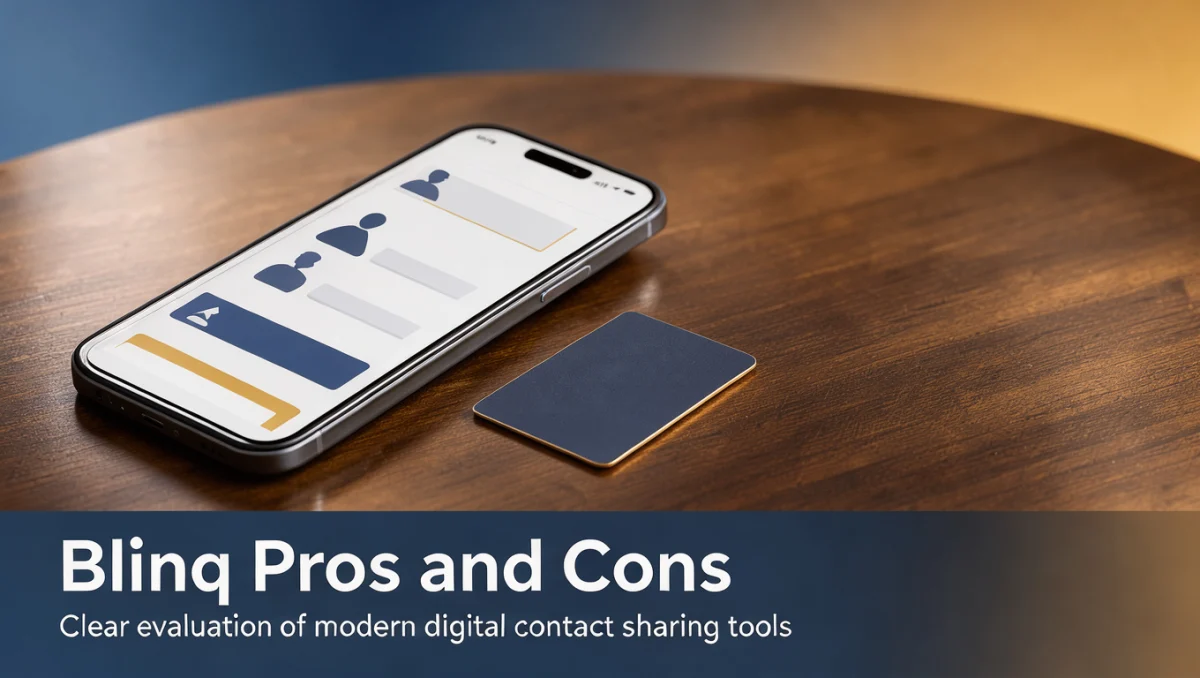
Anyone weighing Blinq pros and cons is usually trying to replace paper business cards with something more current. As networking shifts toward contactless exchanges and centrally managed contact details, professionals and teams need to know whether a digital card platform fits how they actually work. This evaluation is meant to help you decide whether Blinq belongs in your networking toolkit.
Digital business card tools swap printed stock for electronic exchange, letting people share contact information through dynamic links, scannable codes, and physical accessories. Assessing this category means looking closely at administrative controls, how contacts are captured, and how well the tool connects to follow-up workflows, so that sharing stays simple for both the sender and the recipient.
Quick verdict: Blinq earns 7.9/10 for its focused approach to digital networking and contact distribution. It suits individual networkers and client-facing teams that want modern ways to exchange contacts. It is less suitable for organizations committed to traditional paper networking, or for buyers who prefer to confirm their contact-management setup before rolling anything out.
| Evaluation Metric | Summary |
|---|---|
| ebusinessreviews score | 7.9/10 |
| Best for | Professionals and distributed teams that want digital contact sharing |
| Not ideal for | Organizations committed solely to traditional paper stationery exchanges |
| Key strengths | Digital contact distribution, interactive profile sharing, two-way contact exchange |
| What to check before buying | Confirm directory sync rules, export methods, and access permissions on the official Blinq website |
1. How ebusinessreviews Reviewed Blinq
This review examines what Blinq is designed to do, who it serves, and how it stacks up against similar tools. We judged it against seven ebusinessreviews criteria: features, ease of use, pricing and value, integrations, audience fit, support, and competitive position. Plans, prices, and limits change frequently, so we flag what to confirm on the official website before purchasing. This article was researched and drafted with AI assistance, then reviewed and edited by the ebusinessreviews Editorial Team.
2. Quick Summary of Strengths and Trade-offs
Modern identity-sharing tools have to balance fast exchanges at live networking events with administrative control over corporate branding. Software in this category removes the hassle of printing, reordering, and handing out paper cards every time a title, phone number, or office address changes. Instead, professionals keep a living digital profile that updates whenever their details do.
When adopting digital card solutions as part of broader Collaboration & Productivity tooling, businesses should assess how efficiently collected contacts flow into follow-up processes. Blinq concentrates on building interactive professional cards, distributing them through several electronic touchpoints, and receiving contact details back from prospects. Teams should still review governance controls and CRM connectivity before standardizing across large departments.
3. Pros of Blinq
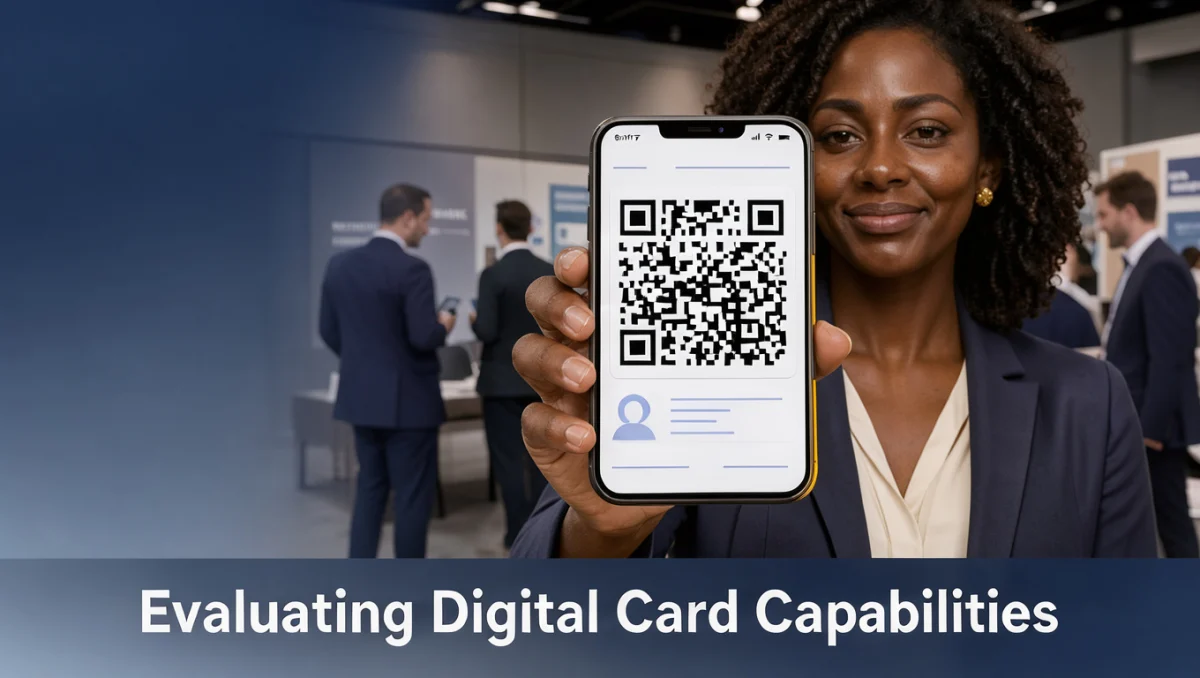
Knowing where Blinq delivers the most value helps buyers decide whether its core features match their everyday networking needs.
Fast Contact Delivery
Blinq lets professionals share their contact identity instantly, without asking the recipient to install an app. Recipients can view profiles through a standard mobile web page and save details straight into their native address book, so introductions at events aren't slowed by software setup.
Unified Digital Identity Management
Keeping several communication channels current is simpler when every contact point lives in one digital card. Blinq supports phone numbers, email addresses, corporate websites, social profiles, and custom external links, so professionals can point prospects straight to a portfolio or a calendar booking page.
Two-Way Contact Exchange
Good networking means capturing the other person's details as well as sharing your own. Blinq includes a built-in exchange feature that invites whoever views the card to submit their name, email, and notes back to the cardholder, which cuts down on lost connections after industry events.
Dynamic Information Updates
A paper card goes stale the moment an office moves, a phone extension changes, or a job title is updated. With Blinq, cardholders can update their details centrally, so anyone who opens the card link later sees current information without any reprinting.
4. Cons of Blinq and Practical Mitigations
Every digital networking product involves trade-offs, particularly around recipients' comfort with technology, administrative controls, and system integrations.
Reliance on Recipient Device Comfort
Digital cards depend on the other person having a smartphone that can open links or read scannable codes. In the occasional setting where attendees avoid mobile technology or face strict device restrictions, digital sharing can't fully replace hands-on exchanges.
Mitigation: Keep a secondary digital option available, such as an email signature banner or a downloadable contact document, for people who prefer ordinary correspondence over scanning codes.
Organizational Governance Verification Needs
Rolling out digital cards across an entire enterprise calls for central oversight of logos, color schemes, and legal disclaimers. Because permission structures and brand-locking features differ between subscription tiers, administrators need to confirm that individual employees can't publish off-brand materials.
Mitigation: Check the official Blinq plan comparison page to see how template lockouts, administrator roles, and central directory controls work before deploying cards across multiple departments.
Contact Pipeline Export Configuration
Collecting contacts electronically adds little value if they stay trapped in a standalone card dashboard. Teams that rely on sales pipelines need collected details to sync directly into their main customer relationship management system.
Mitigation: Review Blinq's official integrations list and export options to confirm whether your sales database connects natively or requires manual file transfers to keep leads organized.
5. Summary Comparison Table of Pros and Cons
Setting operational advantages against administrative considerations gives software buyers a balanced view.
| Operational Area | Key Advantage | Consideration and Mitigation |
|---|---|---|
| Contact Sharing | Instant distribution via scannable codes and web links | Check device compatibility expectations among your target event audiences |
| Lead Capture | Interactive reciprocal contact forms for recipients | Establish clear processes for exporting collected contacts into CRM software |
| Profile Maintenance | Central updates prevent obsolete business stationery | Confirm template permissions to maintain strict brand standards across teams |
| Administrative Control | Consolidated directory management for cardholders | Verify administrative seat allocations on the official Blinq pricing page |
6. Who Should Use Blinq
Different professional roles and team structures get different benefits, and different challenges, when they move to digital contact exchange.
Freelancers and Independent Consultants
Solo professionals gain a lot from an interactive, modern portfolio card that links directly to booking calendars and project galleries. Digital cards remove recurring stationery costs and project a tech-forward image in first meetings.
Small Business Owners and Boutique Agencies
Small agency founders who pitch regularly at local mixers and industry events can capture prospect details on the spot. The reciprocal capture feature sends client inquiries straight into an organized contact log instead of leaving them on scattered paper cards.
Sales Professionals and Account Executives
Field representatives at high-volume conferences need to exchange details quickly while talking with dozens of prospects. Digital profiles speed that up, but sales teams should confirm how collected leads export into company databases to keep follow-up on schedule.
Groups That Should Consider Alternative Approaches
Organizations in strictly regulated environments that prohibit camera-based code scanning on corporate devices may find paper stationery or manual email exchanges more practical. Teams that require custom on-premise directory installations should also carefully assess web-based card architectures before standardizing.
7. Frequently Asked Questions
How does a digital business card work during in-person meetings?
A digital business card shows contact information through an interactive web profile, opened by scanning a code or clicking a shared link. The recipient views the card on their phone and chooses to save the contact file directly to their address book, which removes manual data entry.
What should buyers check regarding team administrative controls?
Buyers should confirm on the official Blinq website how administrators assign cards, lock brand templates, and revoke access when employees leave. Central administration keeps corporate branding consistent across every customer-facing employee.
Why is CRM compatibility an important evaluation factor?
Sales teams rely on central databases to nurture prospects and log touchpoints. If a contact exchange tool can't send collected names and email addresses into the primary CRM, staff have to copy contact records between systems by hand.
How do physical networking accessories complement digital profiles?
Physical accessories contain embedded near-field communication chips programmed to open the user's digital profile when tapped against a compatible smartphone. This gives a tactile alternative to scanning codes while still directing contacts to the same dynamic digital card.
8. Final Verdict
EBusiness Reviews assesses digital identity tools on practical utility, software reliability, and operational transparency across the professional scenarios they're likely to face.
| Criterion | Score /10 | Reason |
|---|---|---|
| Features | 8.0/10 | Provides comprehensive digital profile sharing, reciprocal contact capture, and custom links |
| Ease of Use | 8.5/10 | Simple profile creation and a clean recipient viewing experience without mandatory app downloads |
| Pricing and Value | 7.5/10 | Buyers should verify tier structures on the official Blinq website to evaluate seat costs |
| Integrations | 7.0/10 | Teams must confirm compatibility with their specific customer relationship management databases |
| Audience Fit | 8.5/10 | Strong alignment for individual networkers, field representatives, and modern small businesses |
| Support | 7.0/10 | Prospective users should review official support documentation and contact channels before purchase |
| Competitive Position | 8.5/10 | Stands as a dedicated digital business card specialist alongside broader identity platforms |
Overall ebusinessreviews Score: 7.9/10
Blinq is a solid digital business card choice for solo consultants, modern sales reps, and growing teams that want to replace paper cards with dynamic, interactive contact sharing. Organizations considering wider adoption should verify their administrative hierarchy requirements and CRM sync procedures on the official Blinq website before signing up.
Have questions about choosing the right software for your team? Send them to the ebusinessreviews editorial team at https://ebusinessreviews.net/contact/ or connect with us on LinkedIn at https://www.linkedin.com/company/ebusinessreviews/.