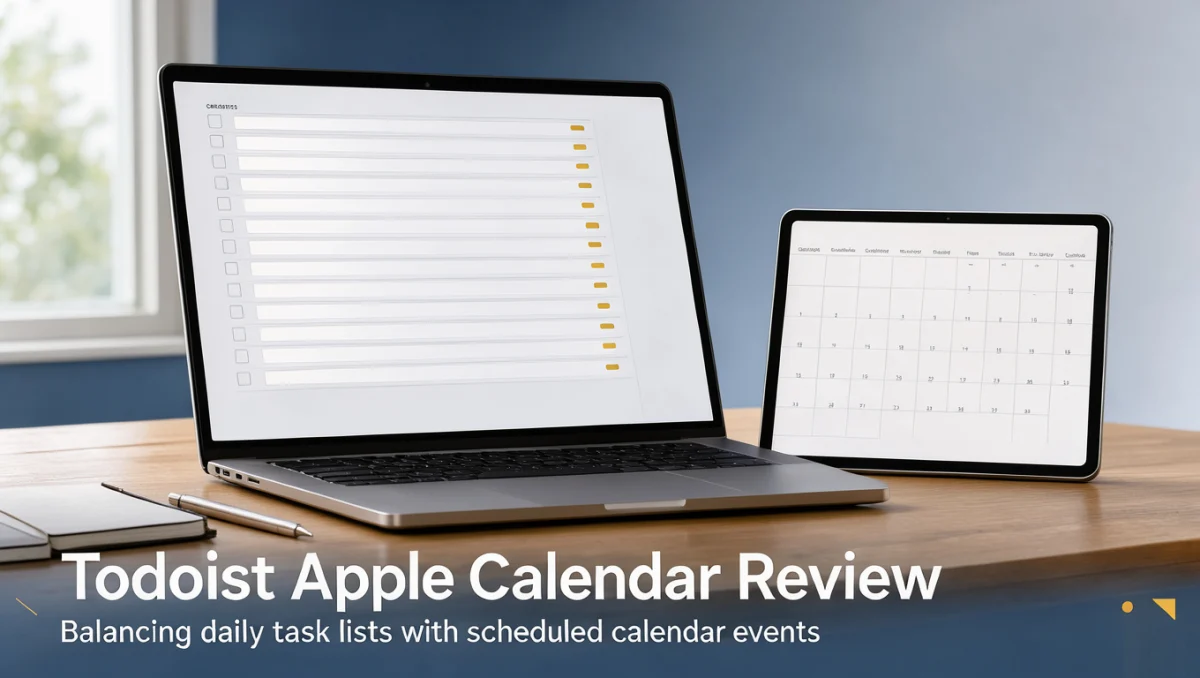
Readers searching for a todoist apple calendar arrangement usually want one place where deadlines, recurring duties, and project checkpoints line up with the hours they actually have. Pairing a list manager with a calendar grid makes it easier to spot overbooked days before they happen. Our reviewers at ebusinessreviews judge these tools on factual performance and practical buying guidance rather than marketing copy.
Seeing what must be finished next to the time available to finish it changes how a workday feels. List software handles errands, client deliverables, and shared projects, while the calendar places each commitment into a concrete window. Before paying for an ongoing plan, check how naturally your scheduling habits fit a structured task list.
Quick verdict: With an overall rating of 8.1 out of 10, this combination suits busy professionals, freelancers, and project leads who want orderly task structure and clear schedule visibility. It falls short for companies that need built-in enterprise resource planning or layered project portfolios that cannot rely on outside utilities.
| Evaluation Dimension | Summary Assessment |
|---|---|
| ebusinessreviews score | 8.1 / 10 |
| Best for | Professionals and teams placing task lists beside daily schedule commitments |
| Not ideal for | Organizations that need built-in enterprise resource planning and unified finance management |
| Key strengths | Ordered task hierarchies, date assignment, recurring schedules, and multi-device access |
| What to check before buying | Confirm on the official vendor website which subscription tiers include calendar feed sharing and sync |
1. How ebusinessreviews Assessed Todoist
This evaluation covers what Todoist is designed to accomplish, the people it serves, and how it measures up against comparable products. We apply seven ebusinessreviews criteria: features, ease of use, pricing and value, integrations, audience fit, support, and competitive standing. Plans, costs, and usage limits shift regularly, so we flag the items to verify on the official site before purchase. This article was researched and drafted with AI assistance, then reviewed and edited by the ebusinessreviews Editorial Team.
2. Understanding Todoist and Its Ideal Users
Todoist is a focused task management application that helps individuals, freelancers, and working groups capture, arrange, and rank their daily responsibilities. Built by Doist, it turns passing thoughts, action items, and milestones into lists that can be tracked and completed. Connected with Apple Calendar, it links what needs attention to the time blocks on a calendar grid.
Its natural audience includes knowledge workers, project coordinators, teachers, and creative freelancers who need firm control over heavy personal and professional workloads. Shoppers exploring the Collaboration & Productivity category often weigh standalone list managers against full office suites to decide whether focused task design gives better results. For anyone whose schedule lives on a personal calendar, judging how tasks behave alongside appointments is a central purchasing question.
3. Key Features and Calendar Coordination
Evaluating task software means looking closely at how it actually works. These platforms generally handle list creation, deadline setting, categorization, and progress tracking for solo or shared work.
3.1. Task Capture and Natural Language Parsing
Users can type action items quickly, and the app reads dates, priorities, and repeating patterns directly from the phrasing. Writing a deadline into a task title turns it into an active commitment on a specific day. This reduces manual clicking and keeps admin time low during busy schedules.
3.2. Project Organization and Sub-Task Hierarchies
Grouping tasks into projects, sections, and indented sub-items brings clear structure. Teams can separate client deliverables into distinct boards, while individuals can keep personal duties apart from work goals. Sub-tasks split large initiatives into ordered steps so every phase stays actionable.
3.3. Recurring Schedules and Calendar Event Mapping
Repeating task options cover obligations that recur daily, weekly, monthly, or on custom cycles. When those dates sync into an external calendar, they appear next to appointments and conference calls. Buyers should check the official vendor documentation to see how external calendar feeds show recurring tasks, since refresh timing varies between calendar clients.
3.4. Priority Levels, Labels, and Custom Filters
Priority markers and custom labels let users sort their lists by context, urgency, or the energy a task requires. Custom filters produce dedicated views, such as everything due today or urgent items tied to a particular client label. This keeps critical obligations visible before their calendar blocks arrive.
4. Ease of Use and Learning Curve
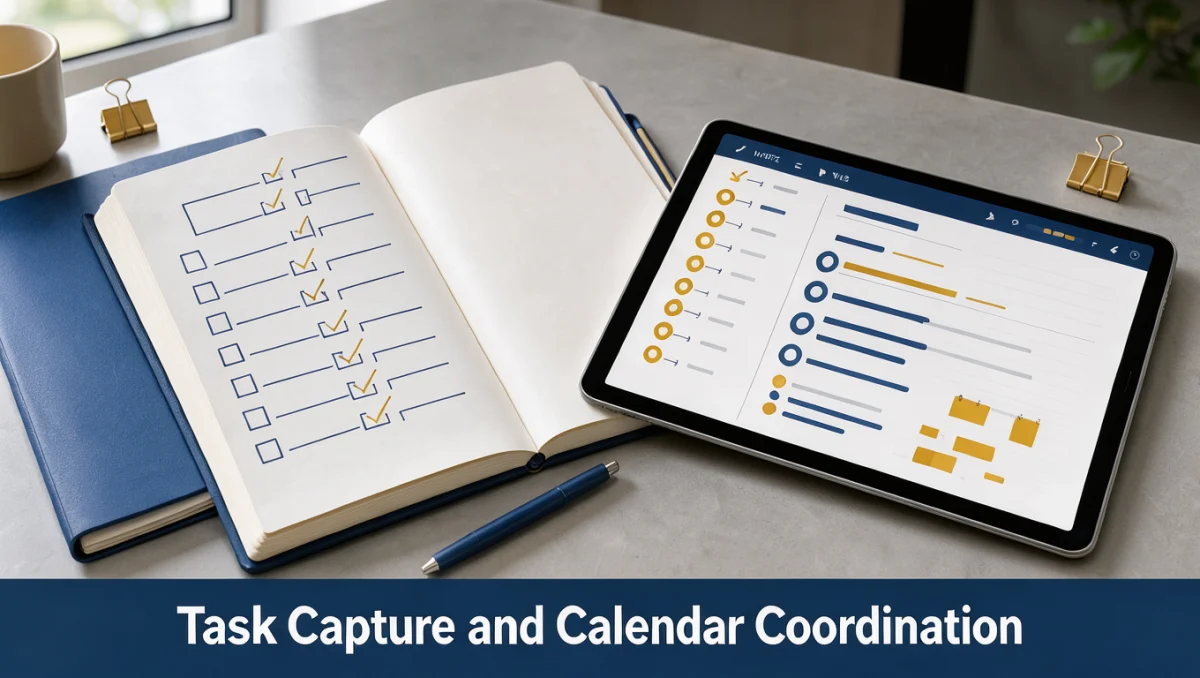
The interface favors a minimal design that keeps clutter low, so attention stays on the list of obligations. Adding a task takes only a few keystrokes, and menus stay simple enough for beginners to get organized right away without formal training.
Basic checklist management is easy to pick up, but mastering nested filters, label conventions, and external calendar subscriptions takes deliberate setup. Users who are new to calendar feed URLs or sync options may need to consult help resources to match refresh intervals between their task lists and calendar views.
5. Advantages and Limitations
Every software setup carries trade-offs, and prospective buyers should weigh them against their everyday workflow.
5.1. Advantages
- A clean interface that keeps daily tasks in view without unnecessary visual noise.
- Flexible natural language entry that turns typed dates into scheduled reminders.
- Hierarchical project structure with sections and nested sub-items for layered tracking.
- Cross-device availability that allows task reviews on desktop and mobile alike.
5.2. Limitations
- External calendar feeds can lag depending on the refresh interval of the third-party calendar.
- No built-in spreadsheet, document authoring, or accounting tools found in broader operations platforms.
- Advanced sharing controls and activity history may be limited, so teams should confirm tier specifications on the official vendor website.
6. Todoist Compared With Similar Tools
Buyers often compare several options to find the one that fits their particular operational focus.
6.1. Comparison With TickTick
TickTick offers task tracking with built-in calendar grid views, habit tracking, and timers. Although TickTick includes native time-blocking within its own interface, Todoist concentrates on orderly lists, natural language input, and flexible project filtering. Buyers who want a timer and calendar grid in one app may lean toward TickTick, while those who value minimalist task structure and a mature integration ecosystem often prefer Todoist.
6.2. Comparison With Asana
Asana is aimed at medium and large organizations that need multi-stage workflows, dependency tracking, and cross-department portfolio dashboards. Todoist, by contrast, supports lightweight task execution for individuals, freelancers, and small teams. Companies with heavy project governance tend to find Asana better for oversight, while people who want simple daily personal productivity usually find Todoist quicker to set up.
6.3. Comparison With Any.do
Any.do blends daily agenda planning with reminders and leans on mobile planning and calendar pairing. Todoist provides deeper project nesting, filtering logic, and custom tag hierarchies. Teams that delegate structured projects typically find Todoist more adaptable to multi-step work breakdowns.
7. Who Should Use Todoist
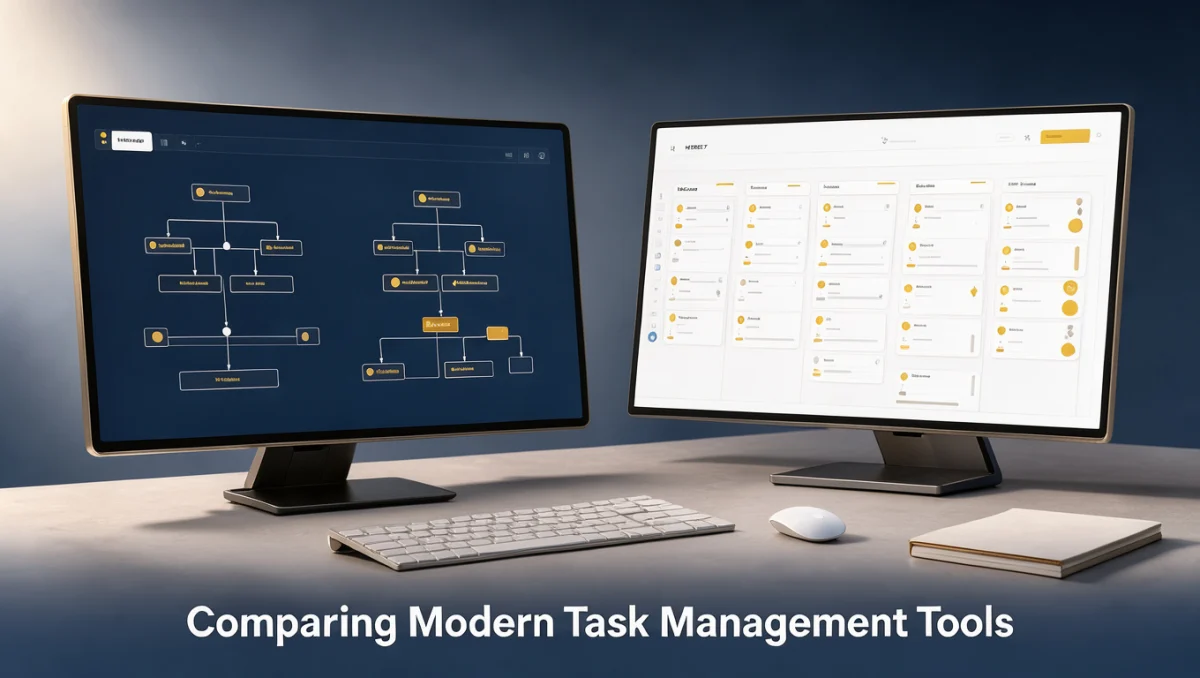
The right productivity tool depends on role, team size, and how complicated the daily schedule is.
7.1. Freelancers and Solo Consultants
Independent professionals with several clients benefit from separating deliverables into their own projects and placing key deadlines on a personal calendar. Color-coded priorities and assigned dates help solo operators avoid missing client milestones.
7.2. Small Business Owners and Department Managers
Leaders running small teams can assign responsibilities, track due dates, and follow project stages without heavy administrative effort. It offers a shared task framework that does not require weeks of onboarding.
7.3. Knowledge Workers and Office Staff
Employees balancing meetings and administrative duties can capture action items from conferences and email threads in task lists. Pairing those items with a personal calendar keeps follow-ups from slipping between appointments.
7.4. Students and Academic Researchers
Students tracking assignments, exam dates, and research milestones can organize coursework by semester and subject. Recurring tasks support regular reading assignments and weekly study routines.
7.5. Who Should Look Elsewhere
Organizations that need integrated billing, timesheet invoicing, or complex Gantt dependency calculations will find a standalone task manager insufficient. Teams requiring full enterprise resource planning should review specialized project portfolio platforms instead.
8. How to Choose the Right Plan
Task platforms usually offer several tiers, from entry-level individual access to expanded team collaboration. Because vendors update plan contents and seat limits, buyers should confirm every limit on the official vendor website before subscribing.
| What to check on the official plan comparison page | Why it matters for your workflow |
|---|---|
| Calendar feed and two-way sync permissions | Determines whether task dates appear in external calendar software and how quickly changes carry over |
| Active project and task allowances | Ensures ongoing client and personal workloads stay within plan boundaries |
| Team collaboration and seat permissions | Dictates how many collaborators can share projects, assign tasks, and comment |
| File attachment and upload allowances | Affects whether briefs, reference PDFs, and assets can attach directly to tasks |
| Activity log and recovery windows | Lets teams audit completed work or restore accidentally deleted project lists |
Readers can consult independent software evaluations from EBusiness Reviews to balance capabilities against budget before committing to a purchase.
9. Frequently Asked Questions
9.1. How does a task manager differ from a digital calendar?
A task manager organizes action items by project, priority, and status, focusing on what needs to get done. A digital calendar reserves specific blocks of time, focusing on when events and appointments happen. Using both together helps confirm that to-do items realistically fit within the available working hours.
9.2. What should buyers check about calendar sync speed?
Confirm whether the connection relies on periodic calendar feed subscriptions or on near-instant synchronization. Standard subscription feeds typically update on the calendar client's schedule, which can delay how quickly a rescheduled task appears on your agenda.
9.3. When should a team move to a collaborative workspace plan?
Consider upgrading when several contributors need shared access to project boards, task delegation, centralized billing, and shared templates. Individual plans cover personal task loads, while team tiers add administrative oversight across multiple accounts.
9.4. How should professionals handle recurring tasks in external calendars?
Check how the task app formats repeating deadlines when publishing feeds to outside calendar programs. Some clients show only the next instance of a recurring task, while others map repeating patterns across future weeks, which changes long-term calendar clarity.
9.5. What determines whether a standalone task app fits your business?
Evaluate whether your current software already includes adequate task assignment within its email or project suite. If existing tools lack flexible tagging, mobile capture, or intuitive list sorting, a dedicated task application can speed execution and improve deadline adherence.
10. Final Verdict
| Criterion | Score /10 | Reason |
|---|---|---|
| Features | 8.8 | Broad list management, fast natural language input, recurring schedules, and flexible filtering. |
| Ease of Use | 9.0 | Clean, uncluttered interface with a minimal learning curve for creating and sorting daily tasks. |
| Pricing and Value | 8.0 | Subscription tiers scale functionally, though buyers must verify current plan details on the official pricing page. |
| Integrations | 7.5 | Supports external calendar connections, but sync timing depends on the external feed refresh rate. |
| Audience Fit | 8.5 | Well suited to freelancers, knowledge workers, and small teams that need structured personal productivity. |
| Support | 7.0 | Buyers should verify official support channels and documentation before rolling out across large groups. |
| Competitive Position | 8.2 | Holds strong ground against specialized productivity tools through fast input and focused list design. |
Overall score: 8.1 / 10
For freelancers, knowledge workers, and collaborative teams that want structured daily clarity, pairing Todoist with a personal calendar offers a dependable way to track deadlines and manage the day. Organizations that require native time tracking, billing, or enterprise project governance should look at broader business management systems to meet those needs.
Readers with questions about software selection or workflow setup can send inquiries through https://ebusinessreviews.net/contact/ or follow ebusinessreviews on LinkedIn at https://www.linkedin.com/company/ebusinessreviews/ for ongoing productivity software analysis.